|
|
General HydroStatics
Ship Stability Software |
|
Command of the Week
(New or interesting aspects of GHS that you may not know about) |
|
GROUND (review)
|
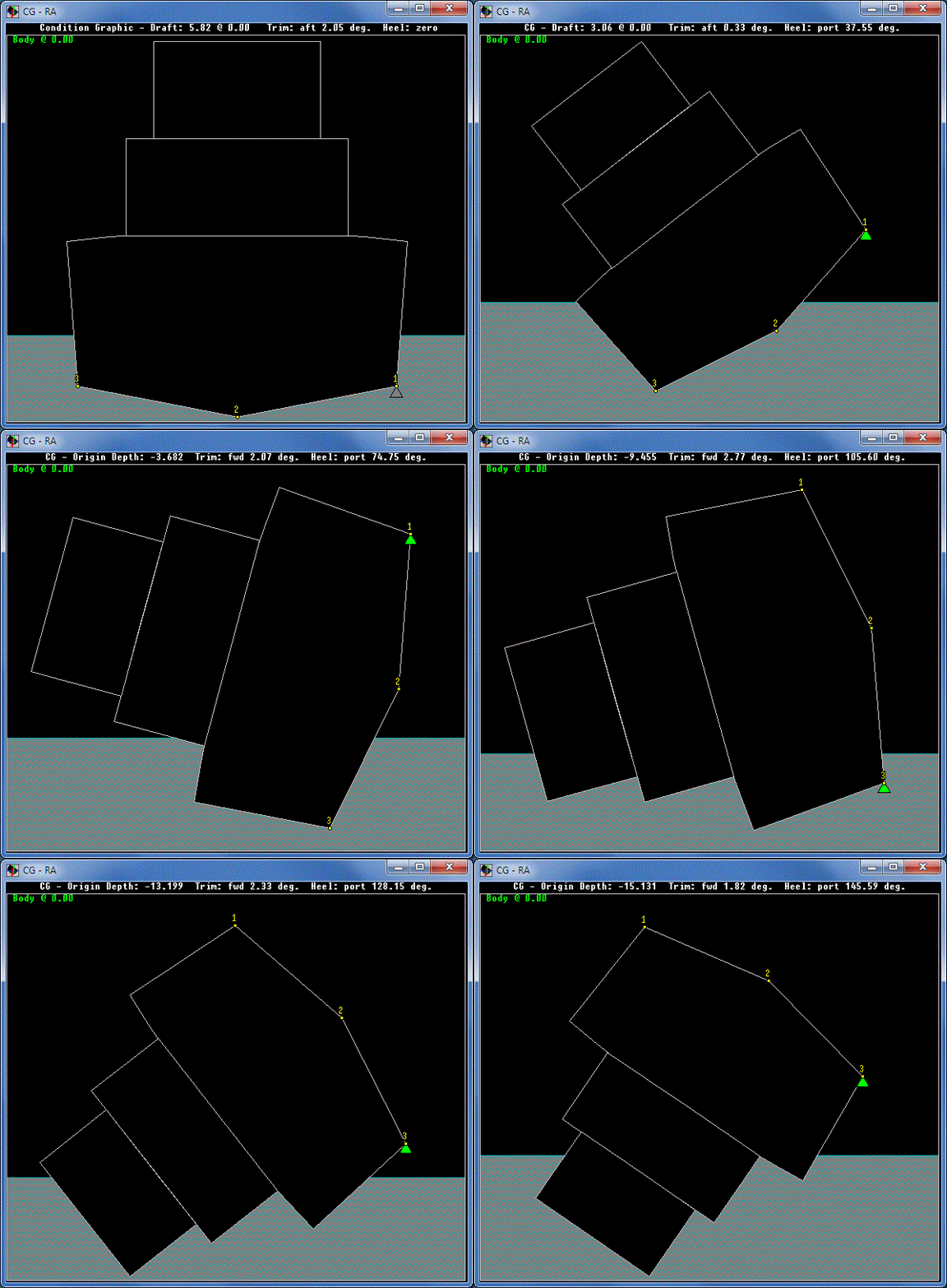
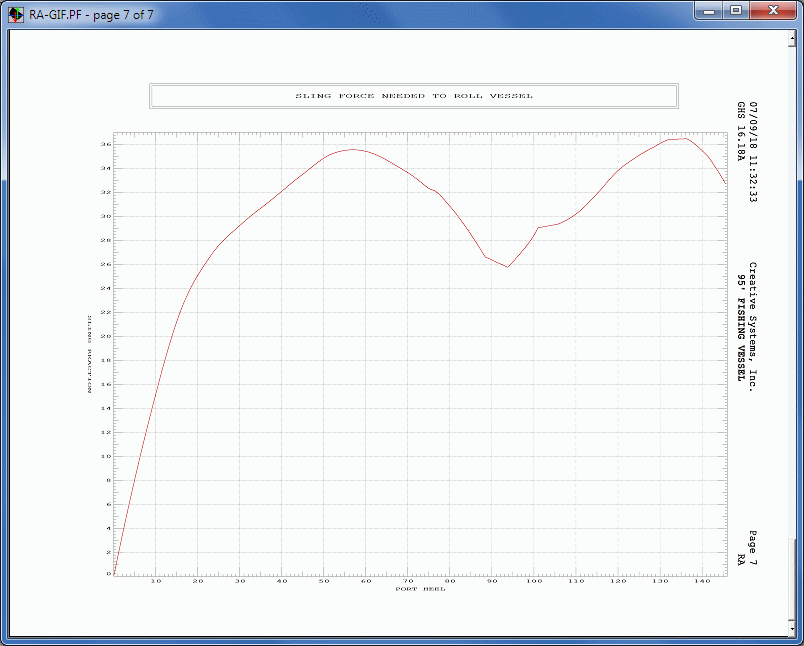
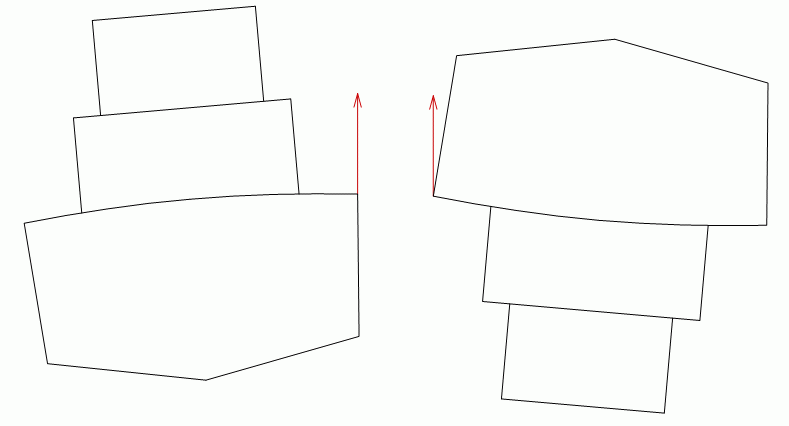
| When you become familiar with the intricacies of the GROUND command, there are all sorts of clever tricks you can take advantage of. Suppose a vessel is to be heeled by a crane. It could be to parbuckle a capsized vessel, roll a partially completed newbuild that was constructed upside down, or even to test-capsize a perfectly good vessel. Your intuition might steer you to the PULL command, but GROUND actually gives you more control. A vertical PULL force is essentially the same as a negative ADDed weight; you could consider it a permanent shift in the vessel's center of gravity. While that might work fine for small heel angles, it can get messy if you want to know the maximum force on the crane. The ADDed weight or PULL force will be constant no matter the heel angle. If the vessel were to capsize, what was initially a heeling moment would now act to restore the heel. |
|
|
Another approach more closely models that of a real crane. Typically a crane operator controls the position of the hook, not the tension on the cable. We may want the lifting force to automatically go slack if the vessel heels on its own. The ground force does exactly that. If the designated point on the vessel falls below a certain depth, a sharply increasing restoring force attempts to lift that point. As soon as the vessel point is above the specified depth, the ground force is reduced to zero.
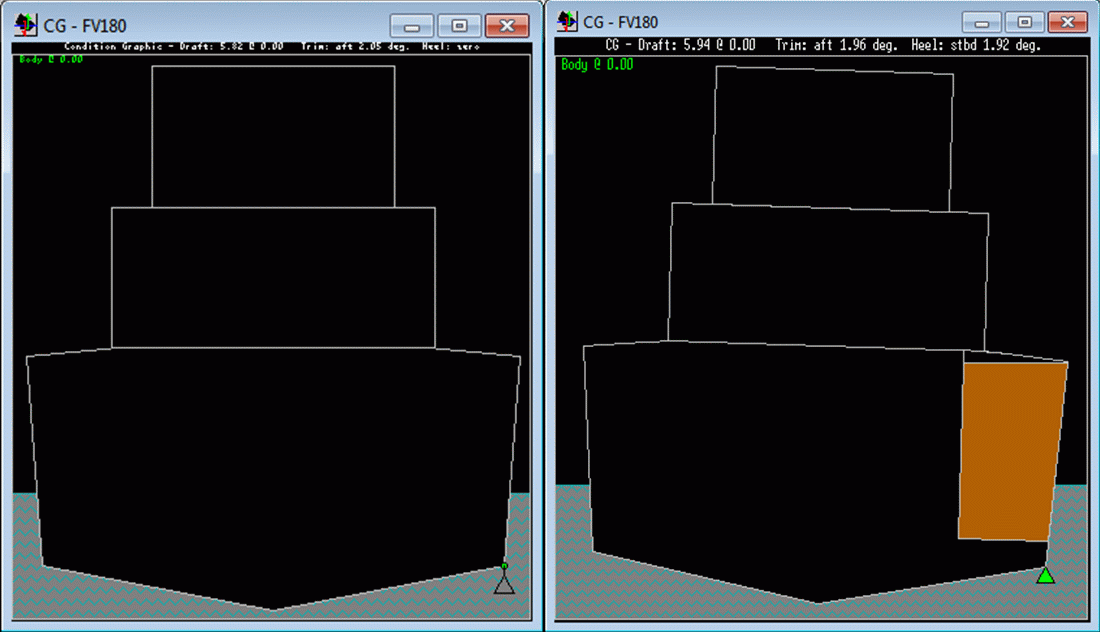
The left image below shows a ground point below the hull. After filling the starboard tank, the vessel starts to list, but as it does, the increasing ground reaction limits the final heel angle. |
|
| There is a mechanism to adjust the depth of the ground which would be analogous to raising or lowering the crane hook. The command is: |
GROUND "description" *,*,*,* /PEN:*+x /NOWARN `where x is the amount to shift the ground |
To make a time-step simulation, just create a macro and call it once for each time-step. In this way, the position of the hook can be incrementally adjusted while solving for the resulting vessel heel and sling force. To see an example run file that generates the images shown below,
click here.
|